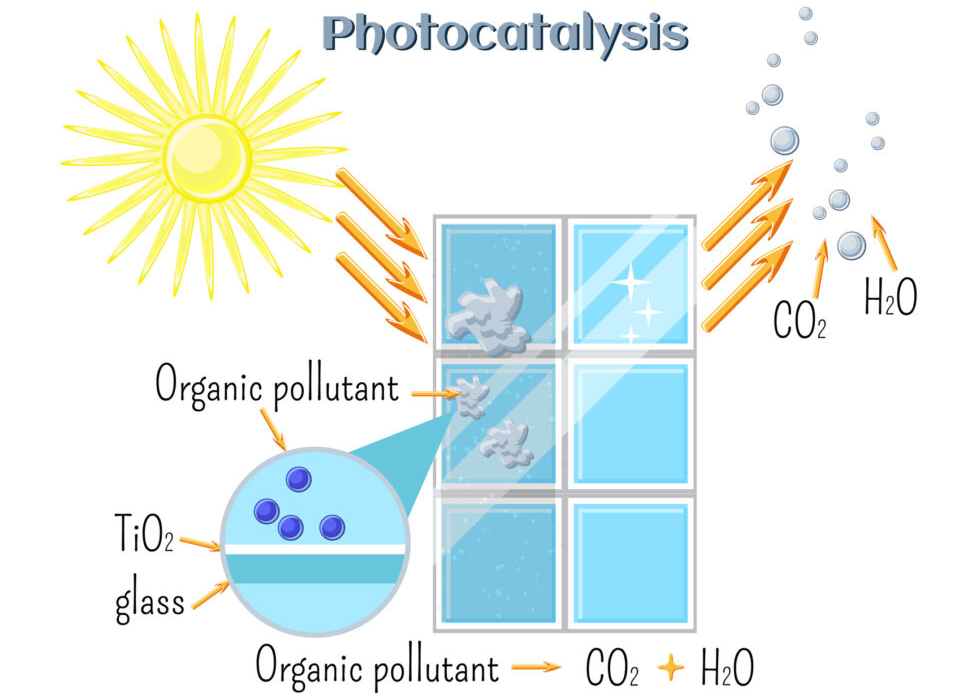
Our photocatalytic antimicrobial coating is a titanium dioxide (TiO₂) spray-on formula that turns any treated surface into a continuous, self-sustaining sanitation system. Activated by ambient light (natural, fluorescent, or incandescent), it generates hydroxyl and peroxyl radicals that break down pathogens, VOCs, molds, and organic contaminants at the molecular level, continuously, without reapplication between service intervals. Unlike disinfectants that work once and are done, this coating keeps working as long as there is light.
The active ingredient, titanium dioxide, is a naturally occurring mineral already approved by the EPA and FDA, found in cosmetics, sunscreens, and food packaging, making it safe for occupied spaces including hospitals, schools, food processing facilities, and agricultural buildings. It poses no risk to humans, animals, or aquatic life. It does not use carcinogenic nanoparticles. It is the only long-lasting coating that doesn't.
Used in combination with our AirShield™ Air Purification System, PAC creates a complete air-and-surface sanitation environment: one actively destroying airborne threats, the other continuously neutralizing what reaches surfaces.
How It Works
Hydroxyl radicals are powerful, natural sanitizing agents produced in our atmosphere through the action of sunlight on oxygen and water. These radicals rapidly decompose pollutants and kill pathogens. Peroxyl radicals, as active as ozone, are the precursors of hydrogen peroxide, one of the most important disinfectants in medicine and pharmacy. Hydroxyls are consumed within milliseconds, ensuring no harmful buildup occurs.
- Destroys bacteria, viruses, fungi, molds, spores, VOCs, NOx, H₂S, ammonia, formaldehyde, and particulates
- EPA and FDA approved - safe for occupied spaces, food contact, and water contact surfaces
- Effective 3 months in high-contact areas, 6 months in low-contact areas
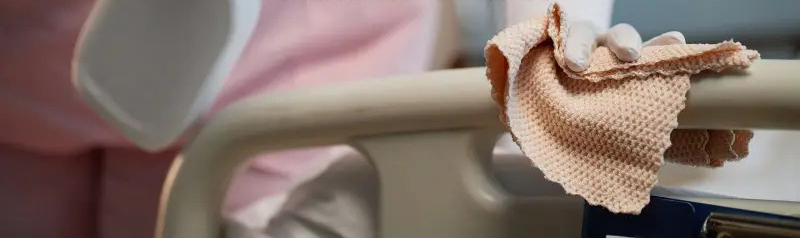
- Applied by standard pressure sprayer - indoors or outdoors, occupied or unoccupied
- Does not use carcinogenic nanoparticles
- Applications: hospitals, schools, food processing, transit, agricultural buildings, industrial facilities
- Note: Requires natural, fluorescent, or incandescent light to activate - not sodium or LED